
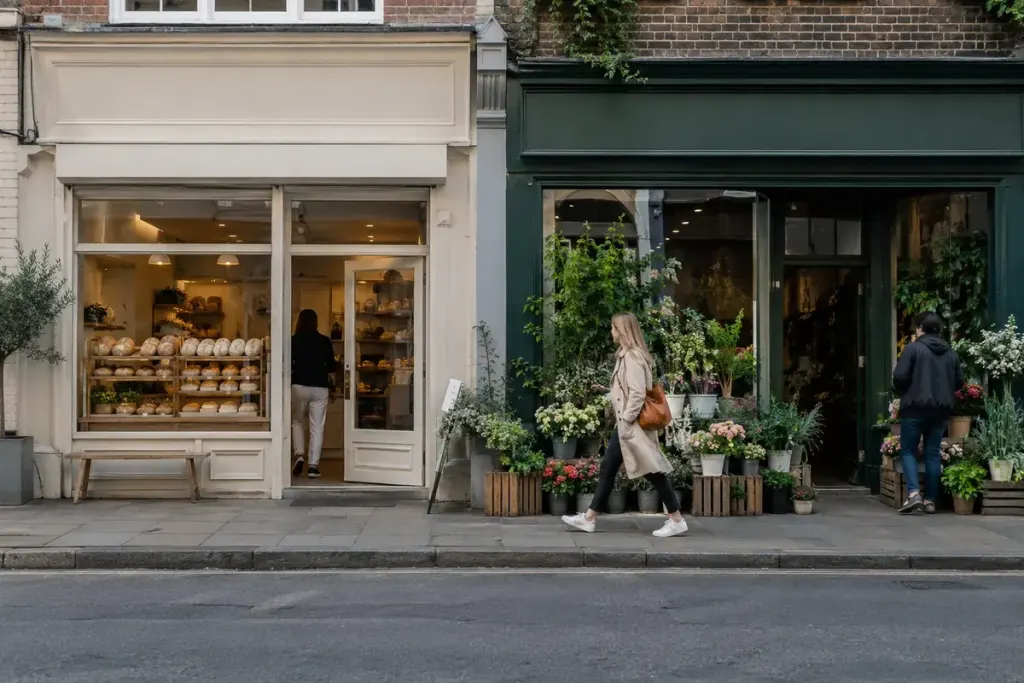
Two shops can use the same sign, uniforms and menu while belonging to different operating businesses. One may be run directly by the brand’s company. Another may be operated by a franchisee under an agreement to use the brand and its business system.
For a reader trying to understand a company, the distinction changes what store numbers and sales figures mean. A map full of locations does not by itself show which assets the parent owns or which costs it carries.
Three questions behind the shopfront
- Who owns or operates this location?
- Which decisions are controlled by the brand and which remain with the local operator?
- What money flows from the location to the brand owner?
Franchise arrangements vary. The Federal Trade Commission’s franchise guide describes fees, royalties, contractual controls and the need to examine the agreement. Recognisable branding does not remove commercial risk or make every franchise contract equivalent.
Read the label beside the large number
Suppose a fictional network reports sales made by all its outlets. That figure can describe customer activity across the system without being identical to the franchisor’s reported revenue. Fees and royalties received from franchisees are a different flow from every purchase made at their tills.
When reading a report, mark whether a number refers to company-operated locations, franchised locations or the whole network. Then find the company’s definition of the metric. Comparing differently defined totals can make a business appear to grow faster or operate at a different scale than it does.
The distinction also helps with everyday questions. A job applicant can identify the actual employing entity; a supplier can establish the contracting business; a customer can find the correct route for a local complaint. The logo alone may not answer any of these.
Start with the outlet’s published operator information and the company’s own disclosures. Treat the shared sign as the beginning of your research, then follow the ownership, contract and money flows underneath it.